Showing posts with label aging. Show all posts

Saturday, 17 April 2021

Wolverley Campsite Part 2


The chief engineer of the Staffordshire and Worcestershire canal was James Brindley. It was completed in 1771 for a cost that exceeded the authorised capital, and opened to trade in 1772. It was a commercial success, with trade from the Staffordshire Potteries southwards to Gloucester and Bristol, and trade from the Black Country northwards to the Potteries via the junction with the Birmingham Canal at Aldersley.On the opposite side of the canal, on the way to the Queen's head, the road runs alongside the Mini Pro Golf Park and the River Stour. 


The view from the bridge over the River Stour shows the Golf Park and, beyond it, the canal and the Lock Inn. 


I'd forgotten how physical camping can be - whether in a 45ft narrowboat or a campervan less than half its size. By the end of Tuesday, I was very tired and sore. I'd used muscles I'd forgotten were there and my legs and knees had not had a good workout in the fresh air in over a year. As a result, Alf was neglected. He was anxious during the drive up to the campsite and, having slipped his lead on a nocturnal pee expedition on Monday night, I wasn't going to risk losing him to the tempting hunting grounds that surrounded us. He was very cross on Tuesday afternoon when I joined the group for afternoon tea. I'd put down his breakfast early in the day and he had ignored it. Now, it was left outside, in its bowl under the Skadu. When we returned later in the evening, it was to the sight of a huge Crow finishing the last few pieces of Kibble. 

A combination of lack of experience of camping in such a small space, too much physical work, and a long and physically demanding walk, meant that Alf never got the promised 'free running' on the playing fields beside the campsite.


He hated the campervan on this trip. I haven't taken him out in it since last October and he's decided it is a scary thing. Normally, he hunkers down on the back seat, in his seat belt safety harness, and goes to sleep. He spent most of the time, both on the journey to, and the journey home from, Wolverley, with his tail between his legs and panting. 

It's been a steep learning curve for both of us, not least the emotional fatigue that comes with spending time in the company of a group of people who know one another and with whom you are the Newbie. I'm sure it will get easier. I will learn from the mistakes and, on the whole, the pros far outweigh the cons.

Next Stop with the same group - St Neots Huntingdonshire.


Wolverley Campsite and environs, Part 1


The best thing about Wolverley, for me, is that the campsite is right next to the canal. I could sit in comfort at The Lock Inn watching the boats passing through. 

The first was the 62ft Narrowboat Zappa, locking up towards Cookley on the Staffordshire and Worcestershire Canal.


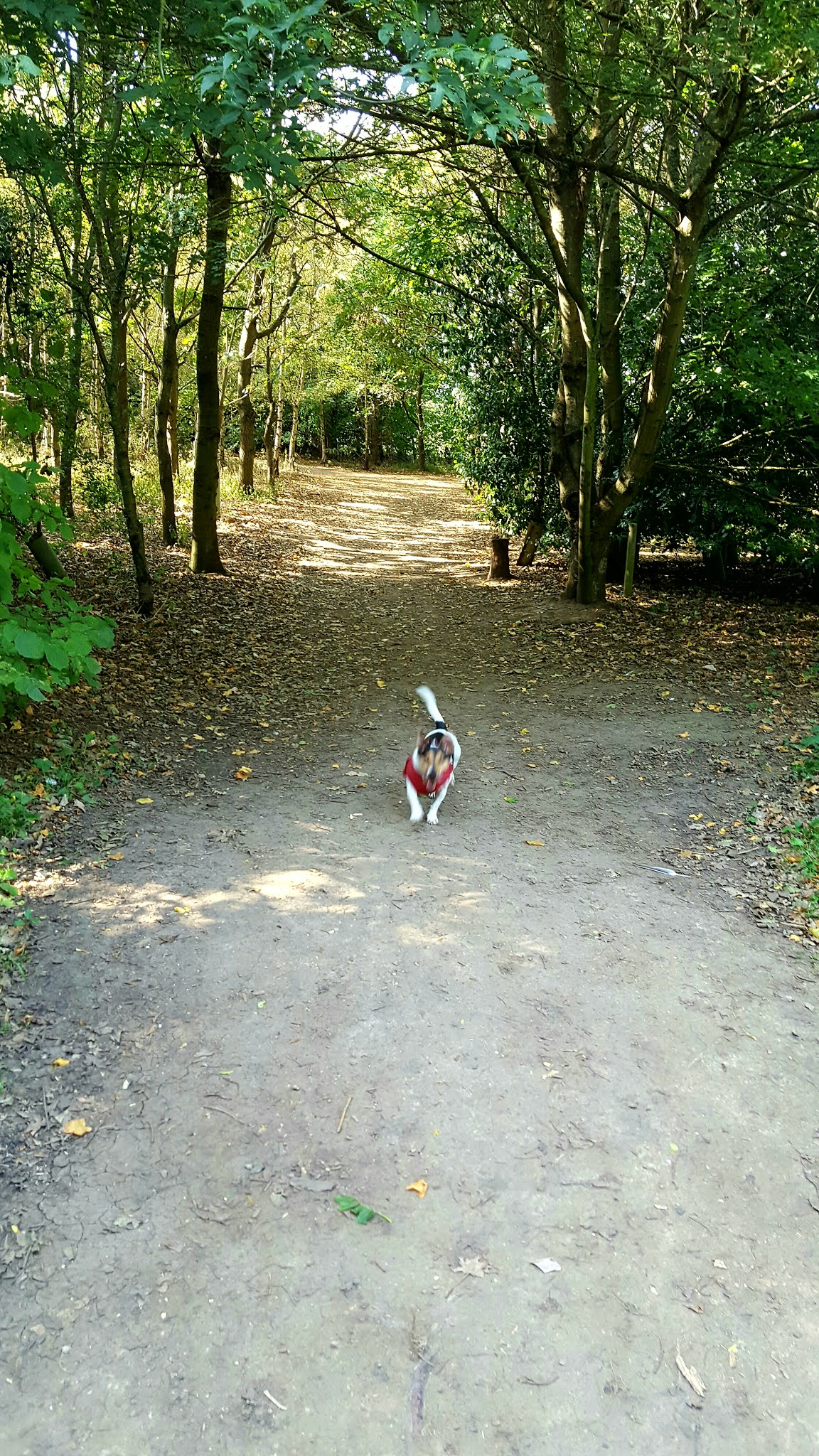
The dog making all the noise is Alf. He was bored and hungry. He could smell delicious hooman food and we had waited over 30 mins for our cheese burger to be delivered to our table. He was sure there would be better pickings on board and wanted to join the crew.


We waited over an hour in total, for our order to be fulfilled. The half of cider appeared about 20 mins after the order. After a further 15 minutes, the waitress asked if I had ordered food. I had - with the cider. She went away and checked. 


No food order had been received in the kitchen. The kitchen would 'cook it right away' and the cider was 'on the house'. After a further wait of 20 mins, the burger arrived, sans chees, but with a layer of charcoal on both sides. It was inedible, so Alf happily disposed of it for me. I ate the chips. By now I was so tired and hungry and there was no point in making a fuss. The Inn was not coping with post-lockdown Covid rules. It had hired a multitude of waiting staff but was obviously short-handed in the kitchen. My waitress referred to 'she', singular. I imagine that the indoor working conditions left the Inn without sufficient experienced kitchen staff.


Earlier, we had walked to the Queen's Head to join the Small Motorhome Forum members who had booked lunch there. We were to be served in groups of six, so I waited until I presumed the first group had been seated and served. We passed the remarkable St John the Baptist Church on our way up towards the pub.


There was no sign of the others at the tables outside the pub and the route to the rear was barred. I assumed the group had finished lunch and gone walking. I made my way back down towards the canal, past the nature reserve and over the bridge to the Lock Inn.


The route was challenging. It was a steep climb up to the Queen's Head and back down again. Once past the Lock Inn, there was another steep climb back to Levant II. That was when I made the wrong decision to stop and have lunch at the Inn before the final climb. I was tired, out-of-condition, and sore. On reflection, I should have gone to the Old Smithy Tea-room on the opposite side of the canal instead of the Inn. The entrance to the Tea-room was through the carpark's garden. After the disastrous burger, I headed there and picked up an enormous wedge of Victoria sponge to have at what was a fast-approaching afternoon tea back at camp.


The area around Wolverley is lovely and rolling, as one would expect of the Stour Valley in Worcestershire. Kingsford Country Park & Kinver Edge is made up of over 200 acres of natural woodland and sandstone cliffs.  The area has many walking trails that cross over between the two counties and each with its own surprises.  The views of the countryside and forest from the top of the sandstone cliffs are wonderful.  On the Lock Inn terrace there is ample evidence of the sandstone cliff behind it.


Behind the Queen's Head the entrances to man-made caves can be found. I'm miffed that I was deprived of a view of these remarkable edifices. Image  
By, CC BY-SA 4.0, Link


Descend into the valley and you’ll discover caves that were once houses that had been carved into the rock. Just over the border in Kinver, Staffordshire, the National Trust have restored several rock houses that are very much worth a visit. Most of the formal houses were carved into the sandstone cliffs around or before 1770 and may have expanded on existing caves or earlier dwellings.  The Kinver edge rock Houses have often been suggested as the inspiration the Hobbit Holes in JRR Tolkien’s masterworks ‘the Hobbit’ and ‘Lord of the Rings’. 


Another trip is called for to explore  Wolverley and the surrounding countryside.

to be continued .......


Friday, 19 March 2021

Getting tired of waiting.

for the new normal. 


An excerpt from a book summed up the first half year of grief. It also pointed the way forward, through empathy with, and care for, others.

The
But survival is not enough.

Since the funeral, in December 2019, I have tried to maintain contact with the few social networks that remained during Eamonn's final months. It was hard, but I made the effort - I went to Ukulele sessions on Thursday afternoons; I walked the dog when weather permitted; I had friends round for tea and a chat. I even went to Southwold, as planned, for our 51st anniversary. I tried to keep busy.  I had counselling sessions at the Garden Hospice. I was beginning to go out more and socialise.

Then, lockdown arrived and isolation began and I had to stay at home.


Throughout the next 12 months, new projects began to emerge, including gardening, campervan, and   reaching out to others who felt the same.


Monday, 1 March 2021

Another anniversary without him


Our conversation lasted over 50 years.

March 1st, 1969 - our first date, at a friend's 21st birthday party. It was the end of the Swinging 60s, and they said 'all you need is love'.

Add to love a lot of hard work, a little luck, and making the most of opportunities offered. 

We were a work in progress, for over 50 years, proving wrong all those who said it would never work.

`I miss our conversations most of all.

Friday, 12 February 2021

Losing a soulmate


When I first met Eamonn, we started as we meant to go on - discussing anything and everything. He asked me to promise never to stop talking to him. As the years passed, I understood why he asked. 

If soulmates do exist, they're not found, they're made. People meet, they get a good feeling, and they get to work building a relationship.


I've almost finished watching The Good Place. At first, I was sceptical that an American Comedy series had anything to teach me.

Throughout the four Seasons, I was in turn irritated (by the number of reboots), entertained, and reminded of the loss  of my Soulmate.

I used to discuss novels and films/TV I'd watched with Eamonn and it usually led to some sort of philosophical debate. He would often ask me "What did you learn from that novel?" At first I didn't have an answer, but, as the years rolled by, I came to see that I didn't actually learn anything new. Rather, my views on what makes humans tick were affirmed through a fictional medium.


I feel the need to share my impressions of The Good Place. In Eamonn's absence, I have bought two kindle books.

1. The Good Place and Philopsophy

2. The Forking Trolley


One of the themes of the TV Series is that of the nature of time. Throughout my life, I have been a great worrier of 'what happens next', always making plans for the future, which never quite matched up in reality to the anticipation - a bit like Christmas. Eamonn, on the other hand, tried to live in the now, particularly in his final years. 

In the Series, one of the main characters, Chidi, a philosophy and ethics professor, says "What if we don't worry about what happens next. .......... There is only one time that is important; now"

Part of my habit of taking candid photographs is the attempt to capture the now. Last year's Photo-journal for Eamonn, brought back the nows that happened in the 50 years we were together; the little things that, collectively, made us soulmates. 


True friends (soulmates) don’t spend time gazing into each other’s eyes. They may show great tenderness towards each other but they face in the same direction - toward common projects, goals - above all, towards a common purpose of life.

The Good Place reminds me of the numerous times when talking with Eamonn would resemble a philosophy tutorial. Most times he would be the tutor, bringing all his experience of studying with the Dominicans to elucidate his points. At other times, he would ask me to lead with examples from Literature, poetry, history, and even film and TV.

I miss those discussions. Trying to live in the now, I am very aware that I have to move forward to the life of the new me, the new self which is based on all the selves I was in my life before and with Eamonn. The idea of self is one that fascinates me. Eamonn and I agreed that, unlike those who went off to 'find themselves', there is no 'true, finished me' to find; rather, me is an ever-changing thing, dependent on time and experience. Eamonn once wrote that "the gallowglass in me, found redemption amongst you" - he was talking about his time at QE and how being the Head of a School with so much history had made him a 'better' man. 

Watch this space.


Wednesday, 3 February 2021

Life story


When Eamonn died, I saw myself as just half a couple, an old, lone widow. I set up a Facebook page as a Memorial in photo-journal form. I was glad I did; the pandemic wiped out the chance for the school to hold a public Memorial event.


I began to get negative comments from some people. About how I should not show the bad times. This one in particular, taken two days after surgery, when Eamonn was in ICU, led to the comment "you shouldn't show pictures like that. The bad times were short compared to the rest of his lifetime." I was aware only of how happy Eamonn looked - he was alive, he had come through a dangerous operation that he thought might kill him

This made me think about all the journals I had written about our life aboard our narrowboat. We had some really rough (if not downright dangerous) times, but I always managed to put a positive spin on them. It's my way of telling stories about my life. 

So I continued, until I had posted one photo for each day in the year of my grief.


That's not to say that the journey through grief is easy, It was not. The pandemic is a scourge to people who are lonely - bereaved, elderly, living alone, even more so. If there is no one to share your thoughts and reactions with—to talk to about a film, to discuss a book with, or to tell who you met for a meal—that event loses continuity. It can never be referred to again because no one else knows it happened. Even before Eamonn died, I hated walking the dog alone because of this need for sharing.

Not only is there no one who knows where you have gone or what you have done or seen or thought, no one cares. I understand why people Tweet—they are searching for someone to share the minutia of their daily activities. It is a quest for someone to know and care about one’s comings and goings. In other words, to find a witness to one’s life.


So what is the solution? Another person equally alone who would like to also fill the empty hours with a human voice, a person who wants to know what you did today. A friend is someone you can be vulnerable with, who knows the secrets, who cares for your happiness and can be counted on in bad times.  I have found technology has offered a lifeline. Two old schoolfriends renewed contact with me. One Facetimes me every week, the other has been on holiday with me, twice. Family members have emailed and Facetimed too.

If one cannot have the one friend who is always there, the solution is to have several friends who

together fulfill your needs. The pandemic wreaked havoc with that, although my Ukulele group persevered with weekly Zoom meetings throughout each Lockdown. "Nothing's as good, if you don't share it". So says Ricky Gervais' character, Tony, in After Life. 


Tony might be the character at the center of After Life, but it’s not really a show about him. It’s a show about all the people around him, in his little world, and how he might be able to impact their lives in a positive way and bring some of the meaning and purpose back into his life. 

The  message of the show is exactly this: We’re not just here for us, we’re here for others.  Selfishness gets us nowhere. Being nice, spreading love, offering a helping hand, and committing the occasional random act of kindness are the way forward, and the way to make our time on this Earth count. The show has also made a deep connection with millions of people going through the same issues as his character across the world. At its core, After Life is a show about what it takes to be happy.


Again, the pandemic scotched any plans I might have for doing this - until I found the Good Grief Trust. The weekly Zoom session opened up the possibility of doing something I had wanted to do before Lockdown1. The area where I live houses a large population of elderly people, some of whom live alone. I wanted to start a social meeting group in the local community centre.  The Good Grief Trust has been running pop-in grief cafes for over a year. During the current Lockdown, there are regular Zoom grief cafes. Under the umbrella of the Good Grief Trust, I have hopes of getting my idea up and running later this year.


A Society Grows Great When Old Men Plant Trees Whose Shade They Know They Shall Never Sit In.

Greek Proverb

I


It took more than a year to reframe my perception of myself into an OK single woman who can manage her life, find support in friends, engage in interesting activities, be there for others in distress, and find a new strength in going it alone. Thanks to friends and family, and strangers who became friends. 

Sunday, 31 January 2021

Into old age, fit and healthy?


As I entered my 60s, I was aware of the need to be fit and healthy, especially given my chronic lung condition. As well as the physical needs, there were the emotional and mental health needs. When Eamonn and I were both working, I didn't feel the need for a circle of friends. After we retired, with most of our  time spent together at home, or aboard the boat, both here and in France, I began to reconsider the need for a network outside the family. We were co-dependent. Both of us had inherited a tendency for solitude and the danger of social isolation grew as the years passed.

I made an effort to find some activities that took me out of the house. I joined an acapella group, co-founded a knitting group and amateur writer's group, and, most importantly, joined the Nuffield Heath Centre gym to keep myself in good shape. 

By 2012, I was at my leanest and fittest, my lungs were in good shape, and I had a healthy social life. Then, in December 2012, Eamonn was diagnosed with esophageal cancer. The need to keep him safe from infection during treatment led to the ditching of the singing group. After the first year, when all active treatment had ceased and he was in remission, I started attending my groups again. I even added tai Chi to my regime of swimming and core exercises. The second diagnosis of prostate cancer came as a harsh blow to me, mentally. 

The first two years of treatment for the prostate did little to stop Eamonn's progress. Then the treatment began to fail. The change to a more invasive pill regime made him fatigued and, gradually, more and more breathless. After a year, that treatment, too, had failed. Radium treatment was suggested. This made him worse. During these four years, life began to deteriorate for us both. We spent more time at doctor's appointments, having tests and scans. My own health suffered. I entered a cycle of depression - declining immune system - lung infection. By the time we entered Eamonn's final months, there was a serious bacterial colony on my left lung, with only one oral antibiotic left that was effective. I had ceased to attend my groups and rarely left the house without Eamonn, except for walking the dog alone, which I found painful. Carer's burnout. That's what it was. 


And it didn't stop after he died.

My GP told me that I came within a whisker of being admitted into hospital thanks to the bacterial infection that wouldn't go away. After three doses of the relevant antibiotic, I was still running a fever and feeling exhausted. The day before Eamonn went into the hospice, I had a day's worth of tests and examinations at the hospital. Apparently, the bacteria had gone, but my immune system was low and I was at risk of having a recurrence.


After Eamonn died,  I was not fit and was overweight through lack of proper exercise and care. The cycle of depression-feeling ill-decline was still there. Emotionally and mentally, I still needed support. I was desperate to get back to my social groups, friends, and family. Then the Pandemic struck and things were put on hold.


Who I turn to remains a problem. The pandemic has made it impossible to renew my social contacts. I do have a few faithful friends and family who are doing their best. But I am totally alone in my grief. 


I bought a book of poems last night, It is called Living without the one you cannot live without: Hope and Healing after Loss by Natasha Josefowitz. This nonegenarian speaks to me in a similar way that Eamonn did. Finding her is something I have been searching for during this past year. I think that her  works and videos will support me in my way forward.


My thanks to The Good Grief Trust for signposting her.

Sunday, 17 January 2021

Preparations

Along with most of the population, I'm finding Lockdown 3 extremely challenging. Things were much worse when I was without my hearing aids. Now that I have them back, I'm beginning to take control of my daily routines again.

They are very weather-dependent, so the first few days with the hearing aids working were spent on housework and cooking. Yesterday, I made my Saturday Facetime meeting with my old school friend, for the first time in a couple of weeks. We've both been through a rough patch, so it was good to be able to talk about it. We chatted for over an hour - the longest since before Christmas.

The weather forecast for today was very good. It was chilly but sunny. I wrote a letter to a friend yesterday, and the first job after breakfast was to take Alf for a walk and post the letter. I met a neighbour with her dog on the way back home. Normally, the two dogs (both male, both terriers) do not get on very well. But this morning, there was a very quiet, civil greeting, giving their humans a chance for a chat.

After lunch, I had decided I would do some preparation of Levant II for her trip to the workshop tomorrow. I vacuumed and cleaned the interior, and turned the engine over to check that the battery was charged. I needed to reset the calendar/clock after the last time the battery went flat.


Then it was time for tea. It took me a while to remember the procedure for getting the gas hob to work, but not as long as the maiden boiling of the kettle. The view from my seat beside the low table is lovely. The Viburnum Bodnantense Dawn is covered with fragrant blossom on bare stems. 


Alf took up his favourite position, checking out passers-by. The whistling kettle startled him - it's very loud. Water boils quickly on the hob but I am still a little worried about the capacity of the gas bottle.


I have almost decided to ditch the expensive non-working Eberspächer  heating to free up the starboard locker for a spare bottle. I would then be more confident about pitching without electric hook-up and running the fridge  (visible below the hob) on gas as well.

I'm going to ask the workshop to do some major refurbishment of the roof in addition to fixing the leaky rear door. I might as well have the heating removed at the same time, or perhaps they might be able adjust the port locker to take a larger gas bottle? 


While the van is in the workshop, I am going to plan my first road trip. I've decided a tour along the coastal path from Southwold to Cromer, would be an ideal late Spring adventure. I'm not keen to be on my own for the whole tour so will have to do some creative thinking about how to include some company. More on that next time.

Wednesday, 13 January 2021

Hearing Loss and Lockdown 3


For years before I got help with my hearing, I spent time guessing what someone was saying to me.  Teaching was extremely stressful. I was unaware that I needed hearing aids until I had the leisure of early retirement to examine all the stressors in my life. I am feeling that again but without the support system I enjoyed when Eamonn was with me.

Social distancing, face masks, self-isolation have all become household words in the last few months and we have all been coping as well as we can. But now I am without my hearing aids and do not know how long it will take to repair them. 

If you live with hearing loss, and before COVID-19, you  naturally lean in to hear what is being said, you  look closely at someone’s lips and then carefully piece together the words. Speaking to someone from two metres away, with a face covering (which not only disrupts lip-reading but also muffles the voice) makes day-to-day interactions even more stressful. 

It is not just physical face-to-face interactions where there are difficulties but the new normal, we are finding ourselves in. Socialising and working from home often involve video calls but the accessibility of these can be well behind the rest of video technology and can result in some dubious captioning or you can only access subtitles if you pay an additional premium. Trying to follow conversations as soon as there is more than one person on a video call can be difficult for those with normal hearing, for those with a hearing loss it’s easy to just withdraw and not contribute. I've already cancelled mu Ukulele Zoom sessions with my LALG group. Even the newly-found Good Grief Project 's Virtual Cafe meetings are not viable without my hearing.

I have been waiting for my depression to spring up on me during this weird and turbulent time and this week it finally has. The feeling of things being out of my control and being unable to escape a situation can make me feel quite anxious and depressed anyway, and I think the weight of this pandemic,  and how much my life has changed since Eamonn died has suddenly hit.

I have been told, time and time again, how well I am coping - I am a coper. Unfortunately, I am also a control freak. During the past year I have worked on 'projects' that I could control; the garden, growing fruit and veg, carrying out repairs and renovations needed in the house, replacing the boat with a Romahome. There is little left to do. I'm not one for sitting still and relaxing. I'm a do'er, a coper, an organiser. Without my ears, I cannot do many of the things that break the boredom and limitations of Lockdown. 

I'm beginning to turn into a cow. I ruminate on things I cannot change. I'm stuck in a rut of grief and regret and fear. The slightest ache or twinge and I'm convinced I am seriously ill. This is anxiety and depression. This I know - and it scares me. GPs are overwhelmed by the pandemic. I'm just another casualty of the mental health crisis. 

We are all in the same storm but not the same boat.


Thursday, 31 December 2020

It's just a little thing


but, as I wrote in November last year, it's the little things that make up all the important memories in our lives.

I remember when Eamonn bought me a Claddagh ring. It was Easter, 1969. We were in Dublin. He'd sent me a Ferry ticket to join him in Ireland for the Easter Vacastion, as he couldn't bear to be separated from me. We went to a little Jewellers shop in Henry  Street. Eamonn wanted to give me a ring that had great significance depending on the way it was worn. For a man who eschewed metaphor at that time, he had great affinity with the tradition of the ring. 

The Claddagh's distinctive design features two hands clasping a heart and usually surmounted by a crown. These elements symbolize the qualities of love (the heart), friendship (the hands), and loyalty (the crown). Claddagh rings are relatively popular among the Irish and those of Irish heritage, as cultural symbols and as friendship, engagement and wedding rings. The  ring was worn with the intention of conveying the wearer's relationship status:


On the left ring finger with the point of the heart toward the fingertips: the wearer is engaged.

On the left ring finger with the point of the heart toward the wrist: the wearer is married.


I've worn that ring for over 51 years and, apart from having it repaired when a crack appeared at the edge of one of the hands, I never took it off.

Over the Christmas break, the pain in my left hand began to increase, especially the finger joints. I noticed that the ring finger bone was swollen. I decided I'd better remove my rings before it was too late. The Claddagh refused to go over the bone. I tried a few home-remedies and, after a long struggle, managed to get it off. The wedding ring is one size larger and slipped off easily. 

I left the rings off overnight, in the hope that the swelling would go down. It now seems that the bone has a touch of arthritis and is not going  to get any smaller unless I take anti-inflammatory pills. I'm unwilling to do that. This morning, I had a major meltdown at the thought that I would never wear the Claddagh again. It's too large for either of my little fingers and in danger of becoming jammed on my ring finger.

I've never been one for wearing jewels of any kind. The one ring that Eamonn bought for our 45th anniversary, has a beautiful, dark-navy, sapphire. I've worn it only to special events as there was no room on either ring finger unless I removed another ring. I usually wore it on my right hand in place of my signet ring.
After much soul-searching, and settling on the idea of wearing the Claddagh on a gold chain, I decided to wear the sapphire next to my wedding ring.

A ring - such a little thing, and yet filled with such significance, and the ability to cause an emotional meltdown;

The Claddagh representing love, loyalty, and friendship. 

The Sapphire -  known as the wisdom stone. It is meant to represent intelligence, education and the ability to make wise and good choices. The sapphire is an ideal gemstone for those looking to channel their energies into clear, positive thinking to accomplish goals. 

Having calmed down from the original disappointment at not being able to wear the Claddagh on my left hand, I am reconciled to the idea of replacing it with the sapphire ring. My way forward has to channel my energy into building a future with new purpose and focus. 

Friday, 4 December 2020

Year Two

And so I have survived my first year as a widow.  Not only am I still standing, but I found myself caring, passionately, about something other than my grief - the outcome of the US election for one. Life goes on. 

I  had a nightmare last night (nothing new in that) in which everyone expected me to move on. It has been a year, after all. But what a dreadful year, made worse by the pandemic and two (so far) Lockdowns. 


I've been reading the contents of some of Eamonn's boxes. He was a great thinker. No only did he think, he wrote down his thoughts - probably to help get them clearer and more coherent. One such piece, written on a single, separate sheet of A4, is most relevant to me at the moment. I think it must have been written as Eamonn was approaching the end of his life.


"Reflections


Purpose of life is more than survival which seems just on the margin. It is to do well - to flourish. This could be put - to live well and leave it with grace. 
Living well: is no longer the struggle to wrench the neccesities of life from the earth.

Survival/flourishing: implies relishing our experiences and learn from them and from the experiences of our fellows reconded in our culture."


I really miss this sort of conversation that Eamonn and I would have at the oddest of times, usually without pre-amble when out walking the dog.


With the arrival of an effective vaccine against Covid-19, here's hoping 2021 will be a better year for all of us in following the purpose of our lives. I know I wouldn't be here to celebrate Christmas (even if it must be, alone) if it weren't for the kindness, support, and love of family and friends. The one positive thing to come out of 2021, for me, is the re-kindling of old friendships, and the renewal of family ties, both on and off-line. I thank you all.


Sunday, 15 November 2020

Effort and work seems to be paying off at last


After breakfast in the Conservatory during a rainstorm, I hung the washing up indoors and put a loaf on to bake. Then I spent the rest of the morning, busily doing nothing while listening to the final chapters of an audible book. The Conservatory is a lovely room now, especially when the sun is shining - which it was.


Alf thinks the room is great, too, especially after he had an early bath in the downpour and came back to roll in his heirloom towel, then bask in the warm sunshine. It was so warm, even without heating, that I had to open both side widows to let in some cool fresh air. The one thing Alf hates is when he spots a squirrel - the one he is convinced is the monster responsible for all the noise after dark, on certain nights of the year - and I won't let him out to kill said noise monster.


The Conservatory is a magical place, no matter what the weather. The light is always changing as the weather changes. The views of the garden are different when viewed through the lense of double glazing drenched in rain that is coming down in buckets. 


The room is the nicest in the house in which to relax without the distraction of the TV or the siren's call of the laptop. Lunch is a proper meal, taken at a table overlooking a lovely view that bears testament to everything towards which I have worked this year

Saturday, 7 November 2020

Bereavement in a time of Covid-19

The Meuse in flood, 2000
When Eamonn was in his final weeks of life,  the stairs at home became his Colmar. Cancer had broken his body down, bit by bit, to a place where five steps amounted to the Meuse in flood; the obstacle that prevented us achieving our target of cruising to Colmar, Alsace, in our narrowboat. 


Our once full and adventurous life, exploring Europe in our floating home, was reduced to a house and garden,  and then, when the stairs became too much despite the Stannah, a room.


Summer 2019
As his cancer became advanced, and then terminal, we lived in a private lockdown. Bound to the house by his withered muscles and failing lungs, we ventured out only for medical appointments and treatment, I did my best to turn the house and garden into a peaceful haven. 


Arbour seat April 2020

After Eamonn died, I set to work preparing for life without him. Before I could set sail, the house and garden needed some attention. It had to be as easy for one to maintain as it had been for two. My physical health and mental state were at rock bottom. Despite this, I worked hard to put many aids in place.

The garden was cleared of its tangles and I set about creating areas that would aid mental recovery. I installed an arbour seat, an area for a physic garden, and planted wildflowers, perennials, and bulbs for a colourful garden next year.


Lunch in the Garden Room
I finished arranging the ground floor so that I could live alone easily, and comfortably,  when my health deteriorated. I installed a video doorbell that allows me to monitor callers. I invested in a personal alarm, in case of accidents; that was upgraded to a smart watch with GPS that did the same job as the household alarm. I had essential repairs carried out in the house ; the conservatory floor needed replacing, it needed turning into a room I could use all the year around, and the central heating system needed servicing plus the addition of thermostat valves on all radiators. This allowed me to close all the upstairs rooms, which resulted in a reduction of energy bills. I also created a mini-flatlet upstairs, for guests who needed their own private space during visits.


Plums from the Community Garden

All this activity at home gave me a focus, from which I expected to emerge better equipped for life alone. As Christmas 2019 approached, I began to attend my social groups again - knitting, ukulele group, and walking with the dog. These would be the things that would make everything else a little more bearable. In the new year, I also joined a new group, at the local Community Garden


Anxiety is such a huge part of grief, and those of us who are grieving right now are having to process loss in the most anxious of times. Prior to lockdown, I had worked hard on my regime for survival, ticking all the boxes grief-therapists and books had taught me to follow. I found some comfort in the world turning around me, in reliable daily rituals, like walking Alf, knitting, playing ukulele and singing, and relaxing in the newly renovated garden.


Community, family, exercise; kept me busy, busy, busy.  I’m sure in other times these activities and goals would have made a relevant coping strategy. But these are the strangest of times. We have to find different ways to grieve. I was, at first, angry, and then saddened, when Eamonn's sisters stopped answering my e-mails.  It made things even harder to lose the support of Eamonn's side of the family, for whom he had done his duty - and more - during five decades of marriage to me. Daily communications, via email and Facetime stopped after the funeral and never started again. 

Coronavirus felt like an assault on my recovery. After cancer had wiped out the future I believed I would have with Eamonn, I felt entitled to start my solo adventures. I should have known better. Feeling entitled only leads to great disappointment. We live in a culture that perpetuates the idea  that life is best led by making plans, and better still by making goals. It’s hard to grasp that the best-laid plans can fall through, that loss can follow loss. Even harder to grasp – and what we’re all learning now – is that your world, and the actual world, can change unimaginably in an instant. Life can truly be out of your control. For a control-freak, this is terrifyingly unbearable.

Like others who have lost loved ones, I was in the process of beginning to explore new things; to start my next chapter. It’s one of the positive changes grief literature talks about.  I’ve read  that, during the pandemic,  others are also reliving their worst days in cancer wards and waiting rooms, too. Whilst my home was alive with good memories, the constant roll of new cases, deaths, and the strain on hospitals on news reports bought back visions of Eamonn’s suffering. But, I had no intention of moving home. What I needed was a way of finding a new, solo way of living - one in which I could escape from the house when I needed a break.

After a few days of lockdown, I slipped back to how I felt into the early days after Eamonn's funeral. My mind provided visions of families hunkering down blissfully together, playing board games, exercising the dog together, and watching TV in bed. It became painful to ask friends and family for help. I was alone, unable to care for myself when ill or after a fall. The thought of a future with nowhere to go when I needed a break and a place to stay; the loss of contact with my close family who lived at a distance, and with whom I was not allowed to socialise; drove me close to the edge.


What would Eamonn advise? I remember him telling me, more than once, as he became housebound and then bedbound, that I was stronger than he ever imagined I could be. This reminded me of the AA Milne quote of which we were both fond.


Something else Eamonn used to say when I had an idea that solved a problem he was mulling over; he would quip, "go the the head of the scholarship class". This memory was something that put me back on the road to recovery. What ideas could this scholarship girl come up with? Could I find something that would replace our  boat as a method of exploring the world? 


Some years ago, a friend of mine was planning to attend a voice camp during the summer vacation. She felt that she was too advanced in years to spend the time under canvas, so she bought a Romahome. I started searching for one of my own. The day before the anniversary of Eamonn's 1st birthday after he died, I drove Levant II home from  Kidderminster. 

Four days later, I drove her to Southwold and learned the potential of my own solo-home-on-wheels in which to embark on more adventures. Unfortunately, at its annual Habitation Check, the local workshop found lots of damp and some leaking gas pipes. It will take a considerable amount to put things right, but I've been given orders (and advice) to spend more, so all will be put right.

Is the current lockdown going to be harder for me because I haven't been able to grieve properly due to Covid-19's restrictions? Time is standing still for everyone. We may have lost a loved one,  our jobs, our freedom, our morning coffee with our favourite people; if we’re very unlucky, we may have lost it all. For those of us grieving a pre-Covid loss, now is the time to reflect and find a way through – not by planning something big and poetic, but in having the time to heal, through not doing much at all. But I'm not very good at doing nothing.


Winter is never a good time for me, but there are things I can do about it. I have my SAD  daylight lamp for winter sunshine, a warm comfortable home in which to read, craft, watch TV, and listen to audio books. I have Facetime for speaking to family and friends. I have winter plants to tend, and, for sunny but cold weather, Levant II in which to go travelling, wearing my new duffle coat. I might even knit a scarf to match. 

I have known a long time ago that it is no use waiting for things to be handed to you on a plate. It takes hard work  making  things happen yourself, that gets results. Most of all, it takes something of which Eamonn made me aware and helped me nurture, and which my GP reinforced that I possess, when discussing my medication review - determination - aka bloody mindedness.

Monday, 13 July 2020

I see you in your photograph - Part Two

I thought I'd found all the old photographs and had sorted them for use on Eamonn's Memorial Page. Then, on opening the very last of the boxes that were in the outside store, I discovered the slides dating from the 1970s and 1980s. They were in a little wooden box that I'd decided to use for storing seeds for the garden. I knew that the old slide projector was in the under-stairs' cupboard, so dusted it off and set it up. Unfortunately, the carousel no longer worked, so I had to load each slide separately.

The quality of slides varied greatly. All were taken using the second-hand Zenit that Eamonn bought for my 30th birthday. I was keen to learn photography and this was my first SLR camera (pre-digital). Some of the slides had deteriorated, due to age and storage conditions; others were as clear as the day they were taken; some (a whole cartridge box) were black, or out-of focus, or with poor lighting. Eamonn couldn't be bothered to learn how to set up the camera. He often criticised me for how long I I took before taking a photo. He'd often leave it on a previous setting, not suited to the conditions in which he was working. The number of black slides indicate that there was something over the lense when he pressed 'play'.


Despite this, I discovered a few shots he'd taken of me on our walks. Poor quality but what a wonderful find.  His photography skills improved enormously after he was given a digital camera by the boys at the school as a retirement gift. The permanent setting was 'auto'.


Memories came flooding back as I worked through hundreds of slides. There are very few photographs from those two decades. Those that were printed were carefully selected as slide-print was expensive. One such print, was this shot I took on our trip to Thetford Forest, Norfolk. It's one of my favourite photos. This scan of the print does not live up to the quality on the original slide. It shows Eamonn, daughter Kate with our first German Shepherd, Morgan. I took about ten minutes to set the camera. All three victims subjects were getting restless.


There are dozens of slides that were't printed from that trip. This is a photo of the projected image. It is one of the better slides.
 Eamonn's younger sister and family met us in Thetford Forest while they were in England


I was going to have a selection of the slides converted to digital format, but decided against it. The memories they evoke would be different if the pictures were enhanced and 'improved'.  This is a younger Eamonn, as he was forty years ago.

I see you in your photograph.